Sikyong Penpa Tsering Calls for Collective Action Against Authoritarianism at the 3rd International Uyghur Forum in Berlin
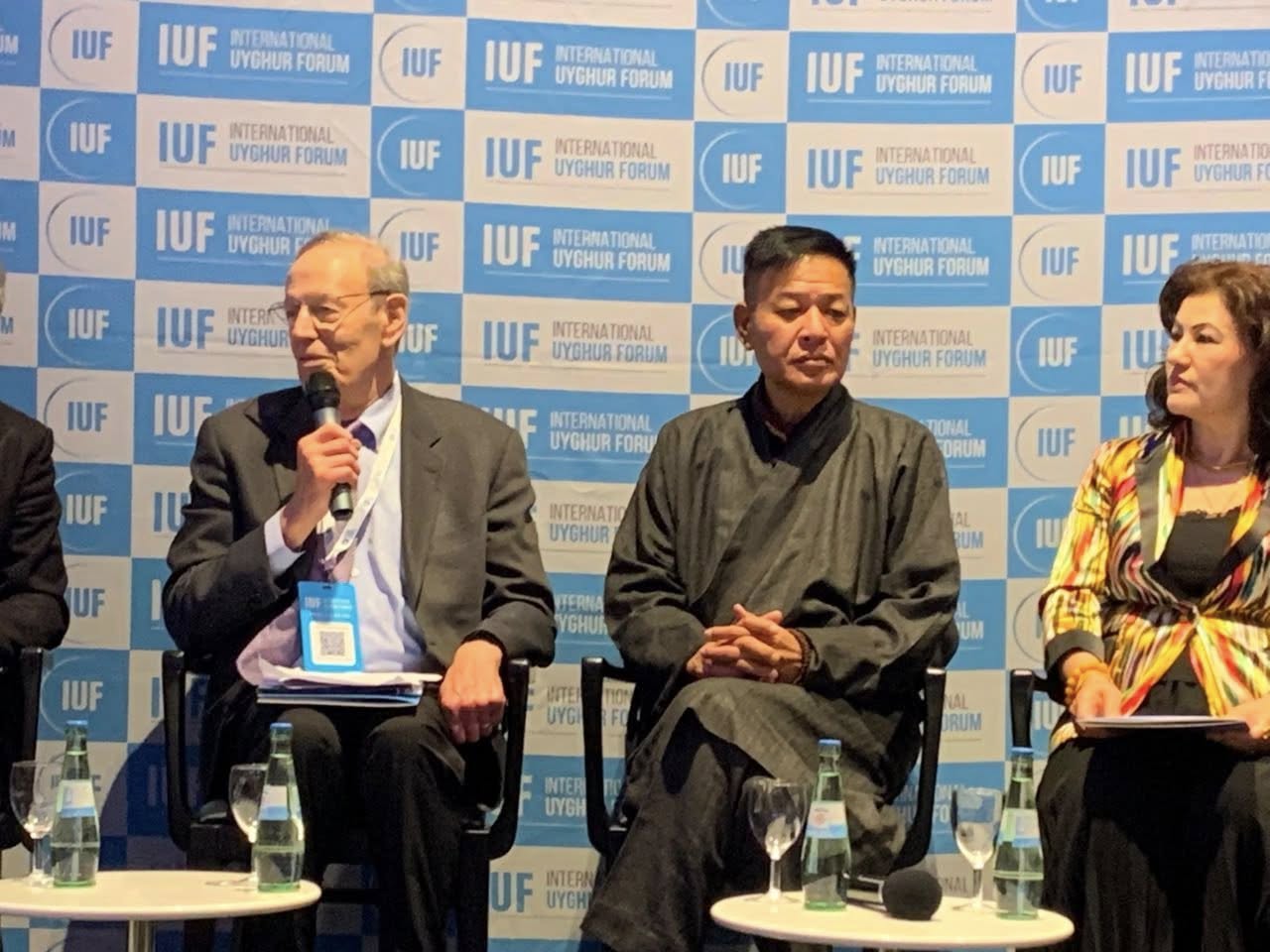
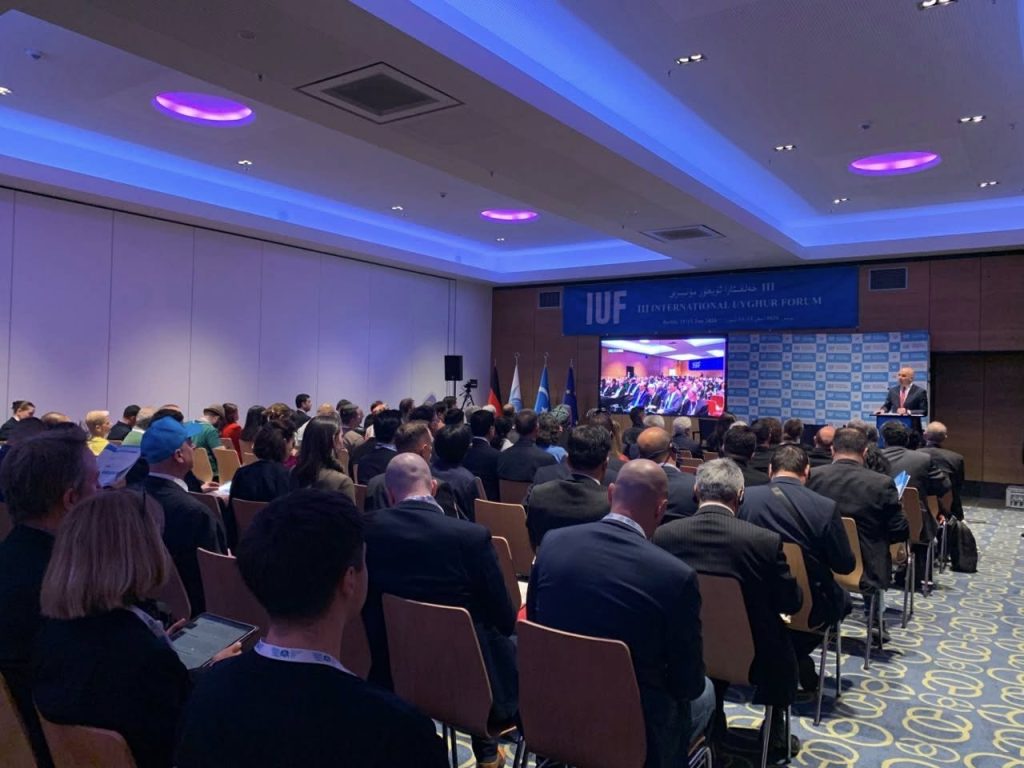
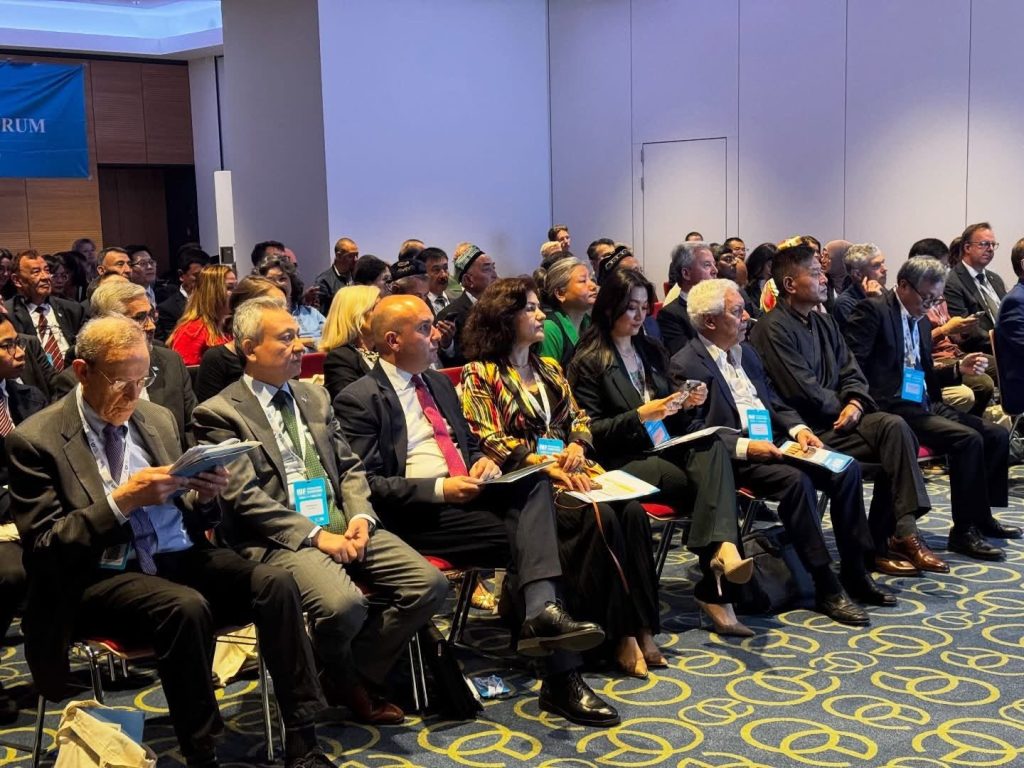
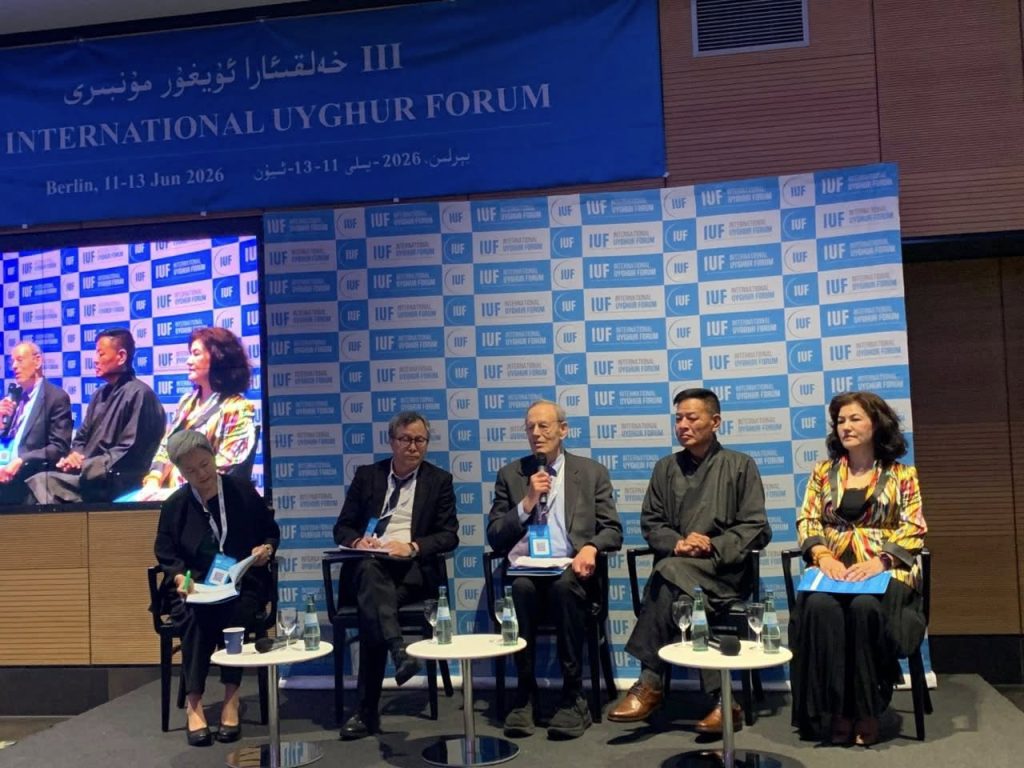
Sikyong Penpa Tsering of the Central Tibetan Administration participated in a high-level panel discussion titled “Testing Global Red Lines: East Turkistan, Tibet, and Taiwan” during the International Uyghur Forum (IUF) held at OCAK Hotel in Berlin.
The distinguished panel brought together prominent political leaders and representatives from Europe and Asia, including Boris Mijatović, Jiří Oberfalzer, Olivier Faure, Dr. Klement Ruey-sheng Gu, and Antoinette Guhl.
During the discussion, Sikyong Penpa Tsering addressed growing international concerns regarding the succession of His Holiness the 14th Dalai Lama and the Chinese government’s attempts to influence the centuries-old Tibetan Buddhist tradition of reincarnation.
Sikyong emphasised that His Holiness, who will celebrate his 91st birthday next month, remains active in serving humanity despite undergoing knee surgery in recent years. He noted that His Holiness continues to meet hundreds of people daily and remains committed to his lifelong mission of promoting compassion, peace, and universal human values.
Sikyong Penpa Tsering explained that His Holiness has provided clear guidance regarding the future of the institution of the Dalai Lama. Responding to requests from Tibetans and Buddhists worldwide for the continuation of the lineage, His Holiness affirmed that the responsibility for recognising his future reincarnation will rest with the Gaden Phodrang Trust, the traditional institution established to oversee matters relating to the Dalai Lama.
Sikyong strongly condemned the Chinese government’s efforts to assert authority over the reincarnation process, describing it as contradictory for an officially atheist state to claim the power to determine the rebirth of a religious leader. He stated that such interference undermines the fundamental principles of Tibetan Buddhism and religious freedom.
Addressing Beijing’s position that the next Dalai Lama must be recognised within Tibet or China, Sikyong reiterated His Holiness’ declaration that he will be reborn in a free country if Tibet and China remain unfree. He stressed that the concept of reincarnation is rooted in spiritual choice and cannot be dictated by political authorities.
Sikyong also discussed the case of the 11th Panchen Lama, recognised by His Holiness the Dalai Lama in 1995, who disappeared shortly after his recognition and whose whereabouts remain unknown. He argued that the Chinese government’s appointment of an alternative Panchen Lama serves political purposes and lacks acceptance among Tibetans.
Furthermore, Sikyong Penpa Tsering challenged Chinese historical claims concerning Tibet’s status. Referring to extensive research conducted by Chinese scholar Professor Lao Hang-Shang, he noted that historical records from the Yuan, Ming, and Qing dynasties do not support the assertion that Tibet has been an integral part of China since ancient times. He highlighted the importance of historical evidence and scholarly research in addressing longstanding misconceptions about Tibet’s political status.
Sikyong also questioned Beijing’s reliance on the so-called Golden Urn system, stating that recent historical studies have found insufficient evidence to support claims that the system was traditionally required for the recognition of Tibetan reincarnate lamas.
In a lighter moment, Sikyong Penpa Tsering recalled His Holiness the Dalai Lama’s humorous response to Chinese claims over reincarnation. His Holiness has remarked that if Chinese Communist leaders are genuinely interested in reincarnation, they should first study Buddhism and search for the reincarnations of former Chinese leaders before attempting to determine that of the Dalai Lama.
Looking ahead, Sikyong Penpa Tsering emphasised the importance of international support for protecting the Tibetan Buddhist tradition and safeguarding the integrity of the Dalai Lama’s succession process. He noted that the United States has already incorporated provisions regarding the recognition of the Dalai Lama’s reincarnation into its Tibet-related legislation and encouraged other democratic nations to take similar measures.
Sikyong concluded by calling for stronger cooperation among Tibetans, Uyghurs, Mongolians, Hong Kongers, Taiwanese, pro-democracy advocates, and other communities affected by Chinese government policies. He urged greater coordination, strategic planning, and collective action to defend human rights, religious freedom, and democratic values.
“We must understand the larger objective first,” Sikyong said. “If necessary, we must come together and demonstrate that freedom-loving peoples can stand united in the face of common challenges.”
The panel underscored growing international concern regarding religious freedom, cultural preservation, and self-determination in Tibet, East Turkistan, and other regions affected by Chinese government policies, while highlighting the importance of global solidarity among communities advocating for human rights and democratic principles.
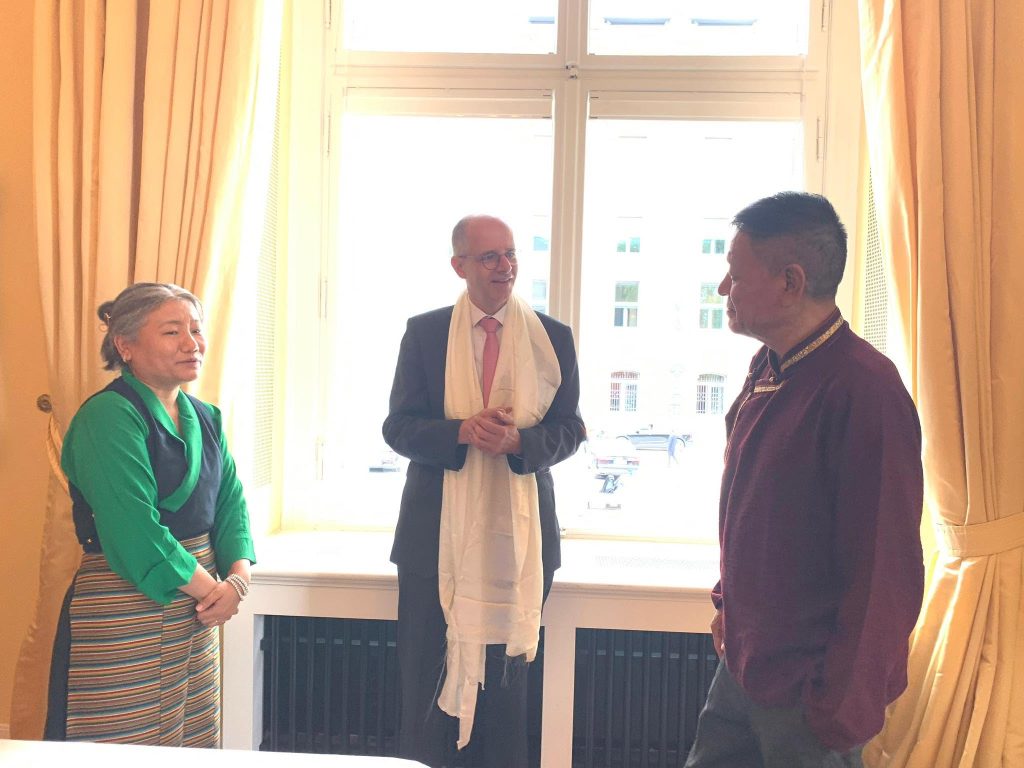
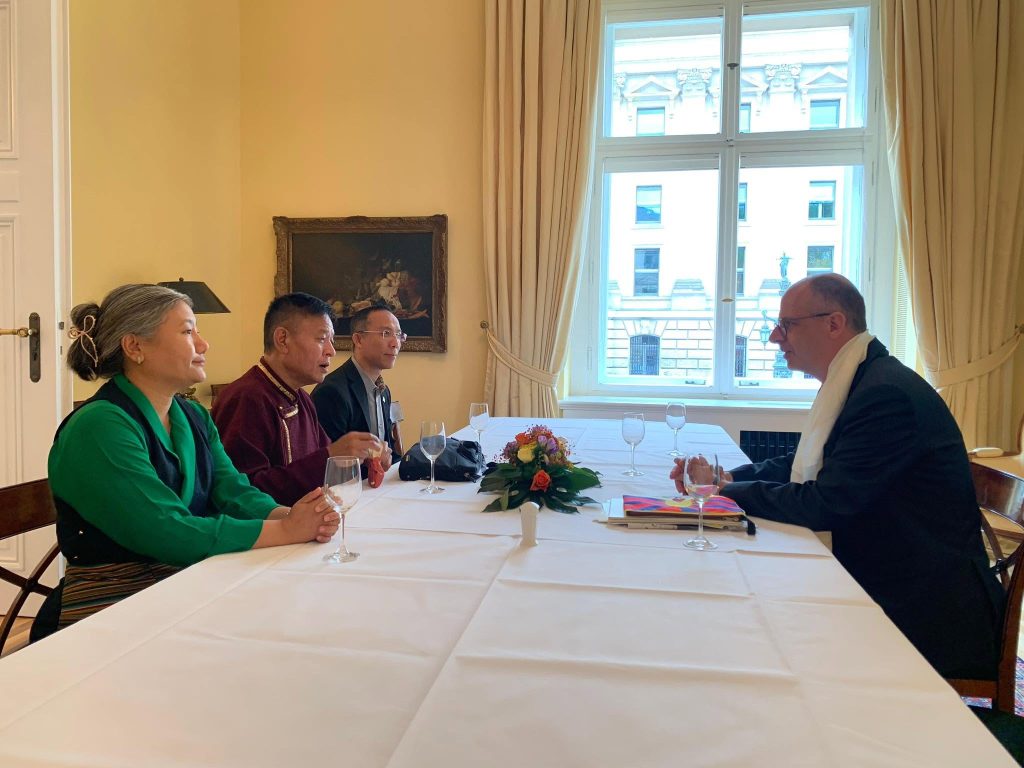
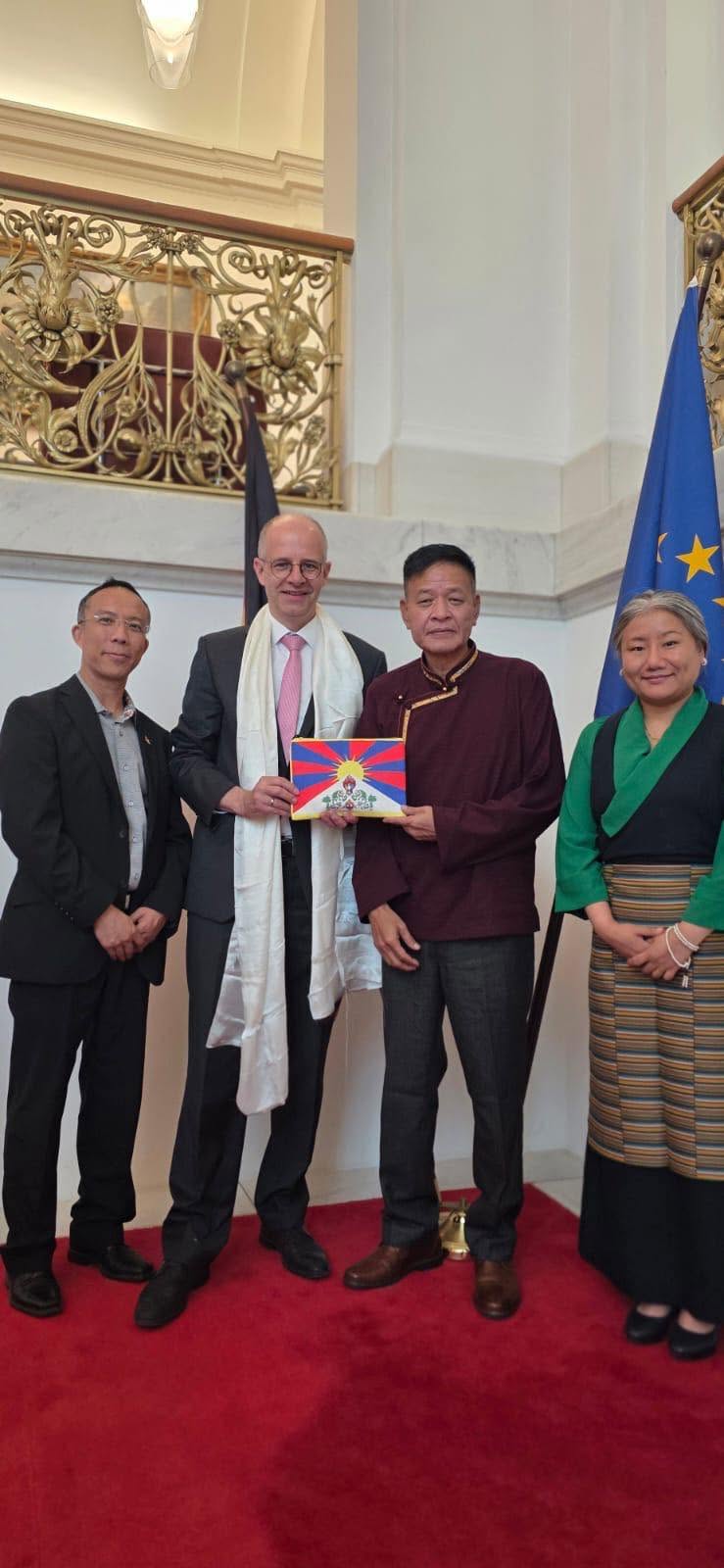
Following the panel discussion, Sikyong Penpa Tsering met with Hon. Michael Brand, Member of the German Bundestag and Parliamentary State Secretary to the Federal Minister for Education, Family Affairs, Senior Citizens, Women and Youth, at Dorotheenstraße 100, Berlin.
During the meeting, Sikyong provided an update on the recent surgery of His Holiness the Dalai Lama and discussed future strategies concerning Tibet-related advocacy and engagement. Hon. Michael Brand expressed his full support for the Tibetan cause and reaffirmed his commitment to continuing his support for Tibet and the Tibetan people.
Later in the afternoon, Sikyong and his delegation met with officials from the German Federal Foreign Office. The discussions focused on several key issues concerning the current situation in Tibet, human rights, religious freedom, and ongoing international efforts to support a peaceful resolution of the Tibetan issue.