Czech Lawmakers Condemn China’s New Ethnic Unity Law; Warn It Amounts to “Cultural Genocide” Against Tibetans

Senior Czech parliamentarians have issued a series of strongly worded statements condemning a new Chinese law on ethnic unity, warning that it represents a further escalation of Beijing’s efforts to suppress the cultural, religious, and linguistic identity of Tibetans and other ethnic minorities.
In video statements, three leading Czech lawmakers — representing both chambers of the Czech Parliament — voiced alarm over the law and called on the international community to take notice.
Parliamentarian Hayato Okamura, Chair of the Czech Parliamentary Group for Tibet at the Chamber of Deputies, said the law would deepen the restrictions already faced by Tibetans. “As the chair of the Tibetan friendship group of the Chamber of the Deputies of the parliament of the Czech Republic, I would like to express my serious concern about the new Chinese Ethnic law,” he said. “The law means further restrictions for the Tibetan people, further pressure on their language, cultural and religious identity.”
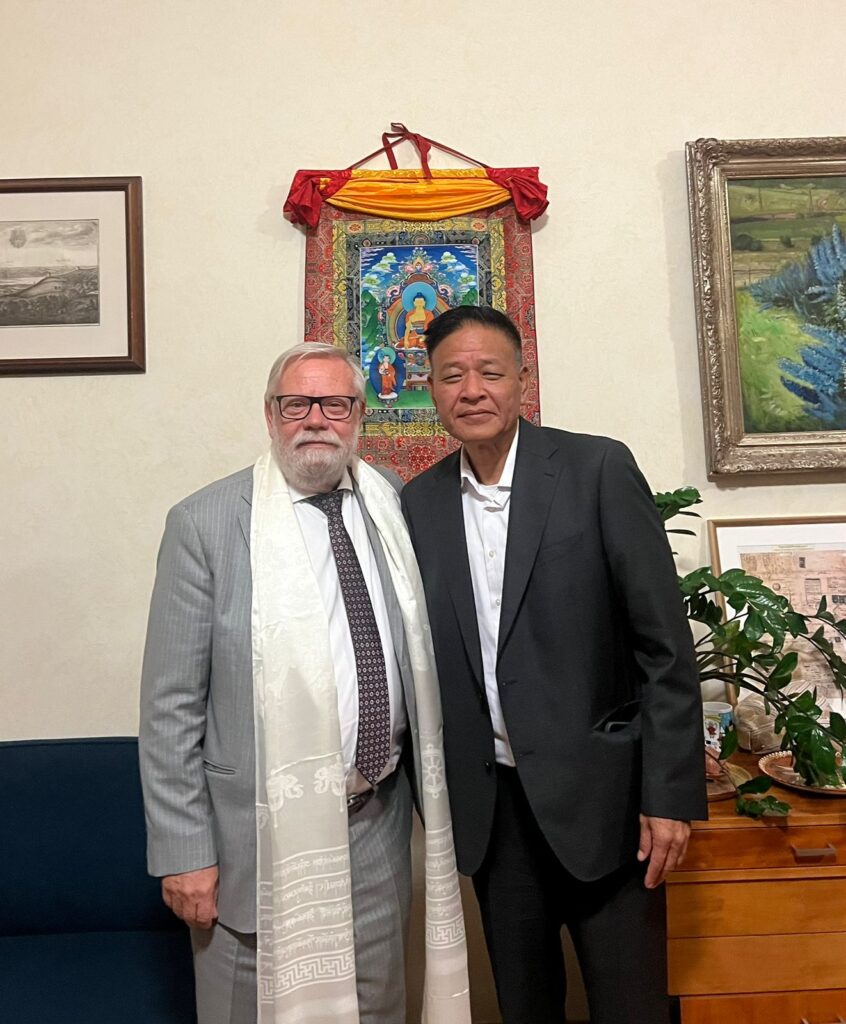
Senator Přemysl Rabas, Chair of the Czech Parliamentary Group for Tibet at the Senate, framed the law as a direct threat to the survival of Tibetan culture. “The strength of the nation is not given solely by its size but also by respect and tolerance towards other nations,” Rabas said. “The Ethnic Unity law adopted by the People’s Republic of China may be regarded as a tool for cultural genocide against ethnic minorities. I wish China to find sufficient respect for history, art, culture and language, and for Tibetans.”
The Vice-President of the Czech Senate Hon’ble Jiri Oberfalzer went further, describing the legislation as part of a broader pattern of forced assimilation that breaches international and even Chinese domestic law. “The Chinese Law on Ethnic Unity and Progress is yet another step toward the complete implementation of ethnic cleansing and the suppression of religious freedom,” the Vice-President said. “It amounts to forced assimilation of various minorities, which violates the UN Human Rights Charter and even the constitution of the People’s Republic of China. It is in fact legalisation of genocide of all minorities. The state with such an approach to its people can’t be a member of global society of developed democratic countries.”
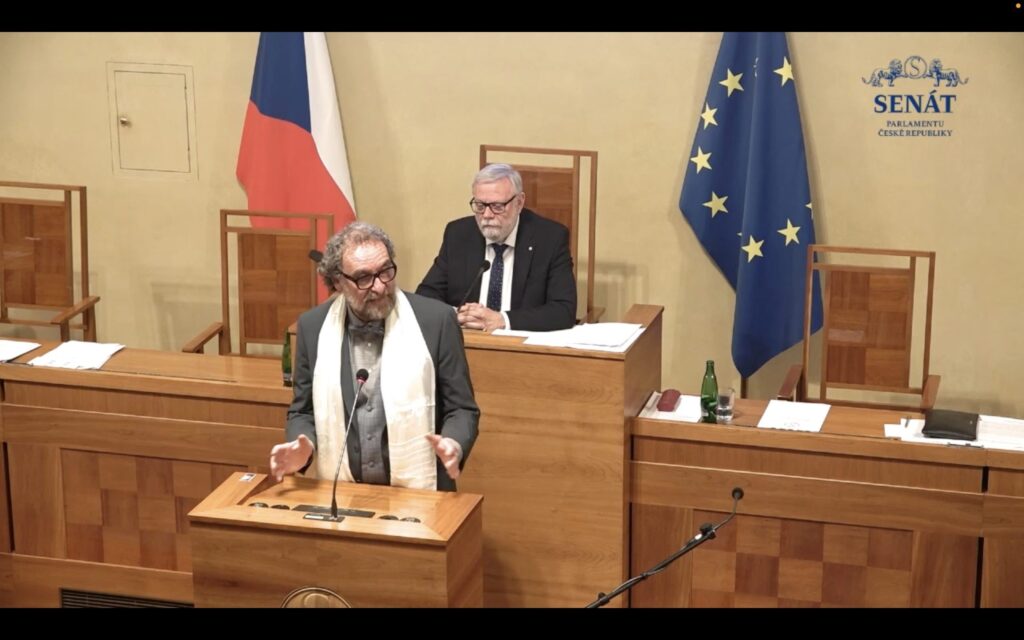
These video statements come close on the heels of a resolution passed by the Czech Senate on 25 March 2026, which formally condemned China’s new ethnic unity law and defended the Tibetan people’s exclusive right to determine their own spiritual succession. The resolution — recommended by the Senate’s Committee on Education, Science, Culture, Human Rights, and Petitions following its session of 24 March, and steered through the plenary by rapporteur Senator Přemysl Rabas — declares that the People’s Republic of China has no legitimate authority to select a successor to the 14th Dalai Lama, and that the matter rests exclusively with the Tibetan people. It calls on the Czech government, including the Ministry of Foreign Affairs, to support a free and independent selection of the 15th Dalai Lama.
The resolution draws a direct line between China’s reincarnation politics and its new ethnic legislation, noting that the Law on Promoting Ethnic Unity and Progress, adopted on 12 March 2026, openly advocates assimilation and imposes restrictions on minority culture, religious freedom, and language education — a law it says conflicts with China’s own constitutional guarantees for ethnic minorities and has also drawn criticism from the UN High Commissioner for Human Rights. It further warns that the law’s reach extends beyond Chinese territory, potentially exposing Tibet supporters abroad, including in the United States and the European Union, to legal liability for activities Beijing deems separatist. The text also invokes the Czech Republic’s long-standing ties to Tibet, recalling President Petr Pavel’s July 2025 meeting with the Dalai Lama in Ladakh and a Czech parliamentary delegation’s visit to Dharamshala in December 2025.
Taken together, the resolution and the lawmakers’ video statements add Czech voices to a growing chorus of international criticism of Beijing’s ethnic and religious policies, particularly as they affect Tibet, Uyghur regions, and other minority regions. Czech lawmakers have a long history of engagement on Tibet, dating back to the country’s first post-communist president, Václav Havel, who was an outspoken supporter of the Dalai Lama and Tibetan self-determination.
The Parliamentary Group for Tibet in the Chamber of Deputies also issued a statement voicing concern about China’s new Law on the Promotion of Ethnic Unity and Progress.
The statement reads,
The Parliamentary Group of Friends of Tibet expresses concern over the Law on the Promotion of Ethnic Unity and Progress, which will enter into force in the People’s Republic of China on 1 July. This law should be viewed in the broader context of long-term pressure on the identity, language, culture, and religious life of Tibetans and other ethnic and national groups in the PRC, including Uyghurs, Mongolians, and other communities. Of particular concern is the law’s emphasis on strengthening a unified Chinese national identity, loyalty to the state, and the prioritization of Standard Chinese in education, public services, and other areas of public life. In practice, this may further weaken the use of Tibetan, Uyghur, Mongolian, and other minority languages and deepen the gap between formally guaranteed autonomy and the actual protection of the rights of local populations.
Tibetans and other communities in the PRC today face a wide range of pressures affecting the fundamental elements of their national, cultural, and religious identity. These include restrictions on religious freedom, pressure to assimilate, interference in education, limitations on the public use of minority languages, demographic pressures associated with the deliberate settlement of the majority Han population, and the risk that efforts to preserve one’s identity may be labeled as separatism, extremism, or a threat to state unity. These pressures are also reflected in access to land and natural resources, where local communities often have little real opportunity to participate in decisions regarding their use. Large-scale infrastructure, mining, and water-management projects therefore raise serious questions regarding their environmental impact and their effects on the traditional way of life of local communities on the Tibetan Plateau.
The Parliamentary Group of Friends of Tibet therefore considers it important that the situation in Tibet and other autonomous regions of the PRC does not remain on the margins of international attention. The Czech Republic and other democratic states should consistently uphold the right of Tibetans, Uyghurs, Mongolians, and other communities to preserve their identity, language, culture, and religious life; to meaningful autonomy in accordance with international human rights standards; and to environmental protection and the fair management of natural resources. There is also concern that this law may have consequences beyond the borders of the PRC, particularly for diaspora communities and individuals seeking to maintain and promote their language, culture, religion, or national identity, and who may be labeled by Chinese authorities as supporters of separatism. Protecting these communities is therefore important for preserving the genuine meaning of autonomy and the ability of local populations to determine their own future.
Welcoming the statements, Representative Thinlay Chukki noted that “These statements from across the Czech Parliament send a clear and welcome signal that lawmakers in democratic countries are watching closely as China tightens its grip on Tibetan identity. Calling this law what it is — a tool of forced assimilation and cultural erasure — matters. We urge other parliaments to follow the Czech Republic’s lead and speak out, because silence only emboldens Beijing to go further in dismantling the language, religion, and culture that define the Tibetan people.”