States Condemn China’s Human Rights Violations and Raise Alarm Over ‘Ethnic Unity Law’ at the 62nd Session of UNHRC
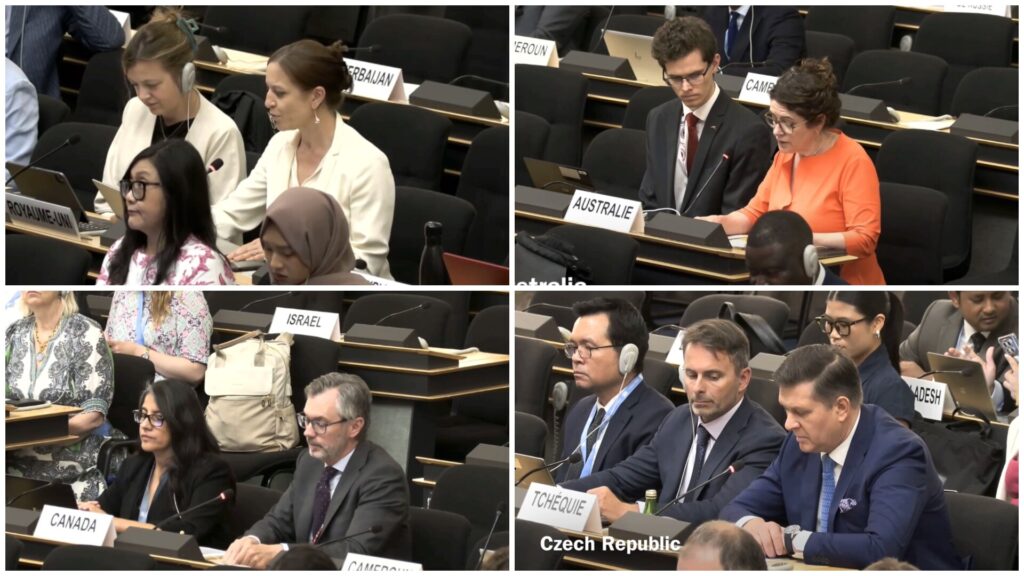
The United Kingdom, Canada, Australia and the Czech Republic expressed continued concern over the human rights situation in Tibet, East Turkestan and Hong Kong during the 62nd Session of the United Nations Human Rights Council (UNHRC), warning that it could serve as a mechanism for forced assimilation and further restrict the rights of ethnic and religious minorities.
The United Kingdom noted that, four years after the Office of the High Commissioner for Human Rights (OHCHR) released its assessment on East Turkestan, China has yet to implement its recommendations. It stated that human rights violations in Tibet and East Turkestan continue and expressed support for OHCHR’s efforts to assess the impact of the Law on Promoting Ethnic Unity and Progress on the rights of ethnic and religious minorities.
Canada expressed concern over China’s Law on Promoting Ethnic Unity and Progress and called for full respect for the human rights of ethnic and religious minorities.
Australia reiterated its grave concern over ongoing human rights violations in Tibet and East Turkestan, as well as the continued erosion of rights and freedoms in Hong Kong. It also highlighted the human rights implications of China’s Law on Promoting Ethnic Unity and Progress. Referring to the reported 78 per cent increase in global executions in 2025, Australia further called on all States to abolish the death penalty.
The Czech Republic reaffirmed its serious concern over the human rights situation in China, including in Hong Kong, East Turkestan, and Tibet. It emphasised that the PRC’s Law on Promoting Ethnic Unity and Progress, adopted earlier this year, raises significant concerns about facilitating the forced assimilation of ethnic minorities across China.
Addressing the High Commissioner, the Czech Republic asked, “Mr. High Commissioner, where do you see the greatest added value of OHCHR engagement in preventing further deterioration of this situation?”
Following the interventions by several Member States, China swiftly rejected the concerns as “false and unfounded”, refusing to acknowledge or engage with the allegations raised.
Representative Thinlay Chukki welcomed the principled statements delivered by the United Kingdom, Canada, Australia, and the Czech Republic, noting their shared concern over the continuing human rights situation in East Turkestan, Tibet, and Hong Kong, as well as the implications of China’s Law on Promoting Ethnic Unity and Progress. She observed that the convergence of these interventions reflects growing international concern that the law may institutionalise forced assimilation and further undermine the cultural, linguistic, religious, and identity rights of ethnic and religious minorities.
Responding to China’s Right of Reply, Representative Thinlay Chukki stated that dismissing concerns raised by Member States does not address the substantive human rights issues documented by the Office of the High Commissioner for Human Rights and other UN human rights mechanisms. She emphasised that meaningful engagement with the Human Rights Council requires constructive dialogue, transparency, and accountability. She further underscored the importance of sustained OHCHR monitoring, independent reporting, and continued international engagement to help prevent further deterioration of the human rights situation and to uphold China’s obligations under international human rights law.