Tibet Bureau in Geneva Holds Two-day “Together for Freedom: A Joint Action Seminar in Europe”
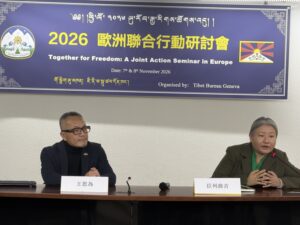
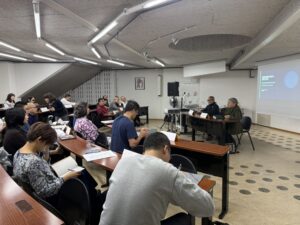
The Office of Tibet in Geneva organised a Conference titled “Together for Freedom: A Joint Action Seminar in Europe” at the University of Geneva on 7–8 November, bringing together around 30 Tibetans, Chinese, Uyghurs and Hong Kongers from the Netherlands, France, Belgium, the United Kingdom, Switzerland and other European countries, who are mostly human rights activists, democracy advocates, and professionals.
The conference was graced by Thinlay Chukki, Representative of His Holiness the Dalai Lama and the Central Tibetan Administration, and Steven Wang, Ambassador of the Taipei Representative Office in Switzerland. The Deputy Representative of the Taipei Representative Office in Geneva, the First Secretary of the Taiwan External Trade Development Council Taipei Representative Office, and the participants.
At the opening ceremony on 7 November, Representative Thinlay Chukki delivered the welcome address, emphasising the importance of engaging with Chinese communities in Europe. She also introduced the work of the Office of Tibet in Geneva and outlined the policies of the Central Tibetan Administration (CTA).
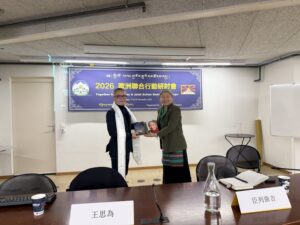
Ambassador Steven Wang subsequently delivered a speech on China’s evolving machinery of transnational repression and the resistance of pro-democracy communities. Following the address, Representative Thinlay Chukki presented him with a khatag and books as a token of appreciation.
The conference also witnessed the formal establishment of the Chinese Tibet Supporter Groups in the Netherlands and France. In recognition, Representative Thinlay Chukki presented members of the two groups with ceremonial scarves as a gesture of appreciation for their commitment.
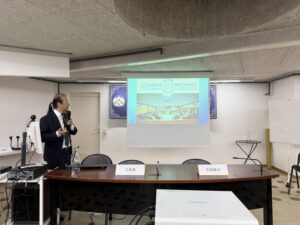
During the conference session, Sangay Kyab, Chinese Liaison Officer for European countries at the Tibet Bureau in Geneva, presented the organisational structure of the CTA and the democratic framework of the Tibetan administration in exile.
A Chinese participant of the Democratic China and Future of Tibet Forum in Dharamshala also shared his perspectives on witnessing the exile Tibetan administration and leadership, followed by an interactive question-and-answer session.
Over the two-day conference, participants discussed a range of issues, including responses to repression by the Chinese government, democracy in China and the Tibet cause, human rights advocacy and long-term strategies, European experiences of resistance, new approaches to collaboration and cooperation, and preparations for the 30 March anniversary in 2027.
The conference concluded with the issuance of an Eight-Point Common Statement of the European Chinese Conference, outlining the participants’ shared positions and commitments.