Over 200 Tibetans and Supporters Gather in Bern to Protest China’s Intensifying Assimilation Policies and Honour Lobga Rangzen
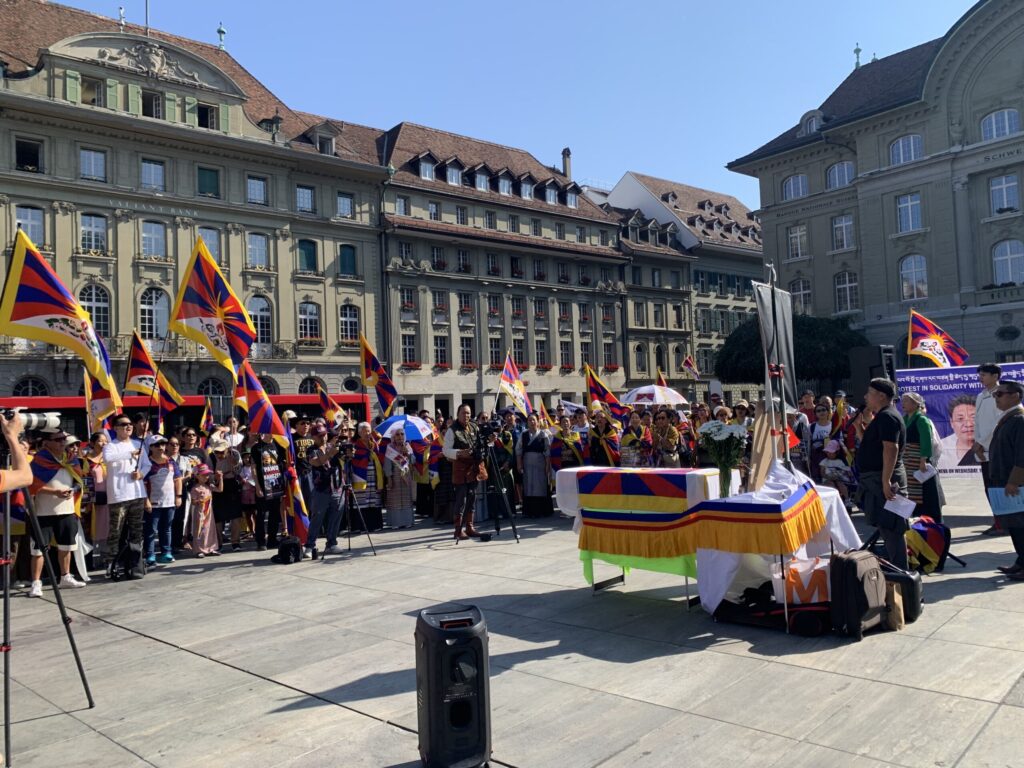
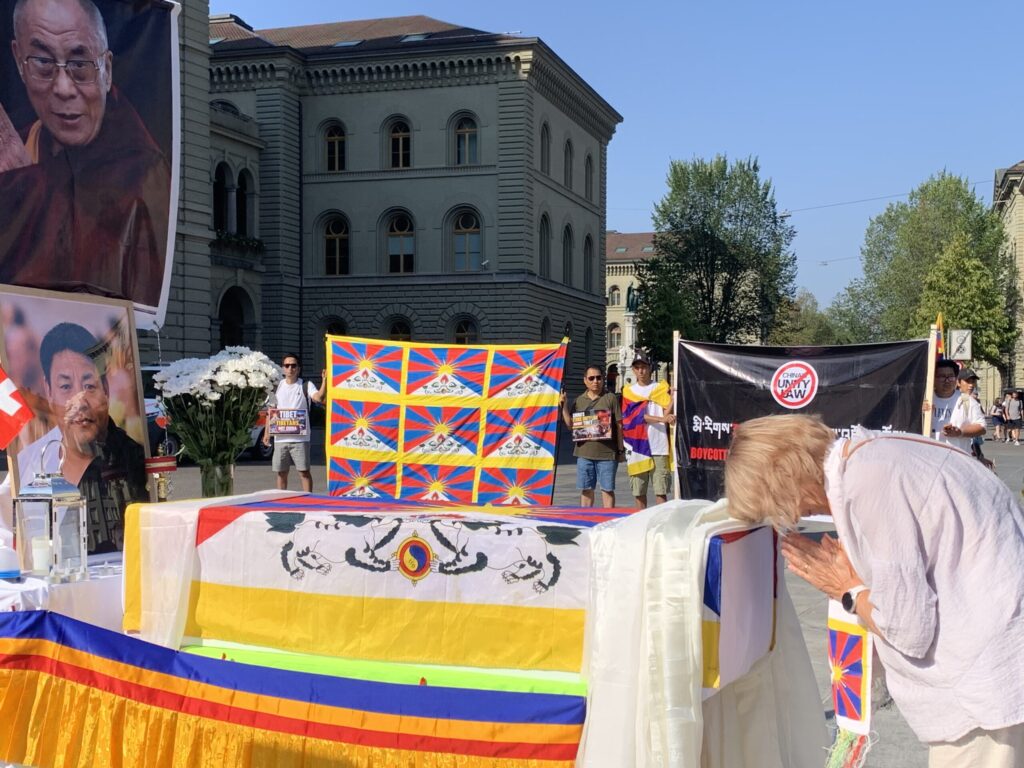
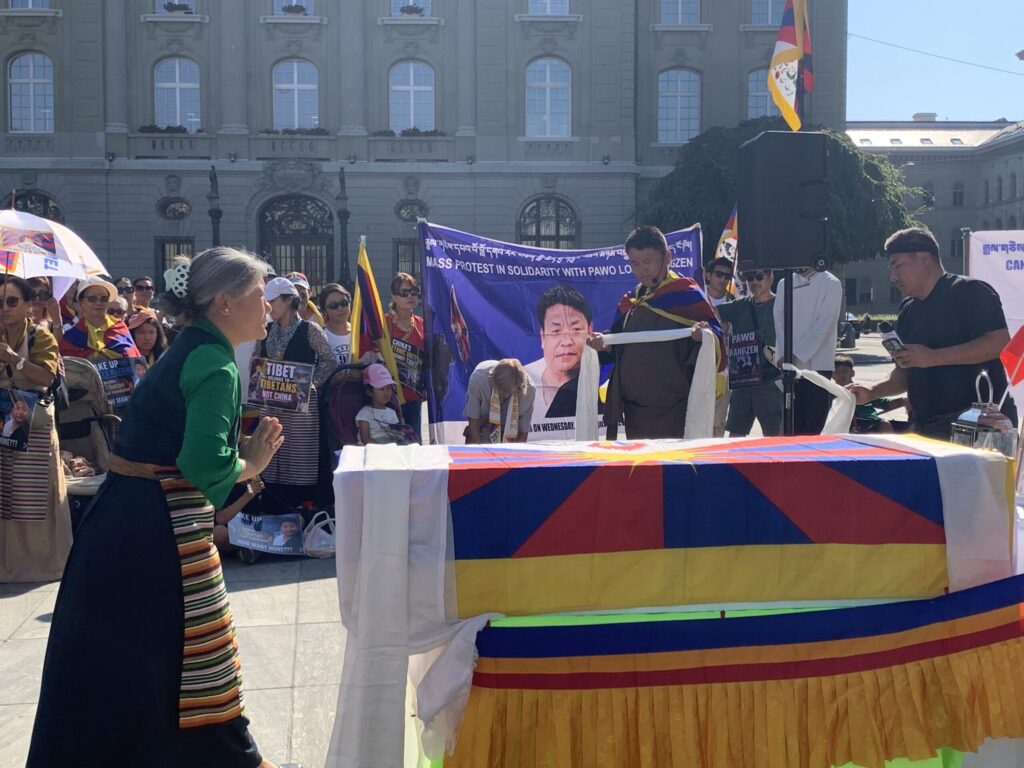
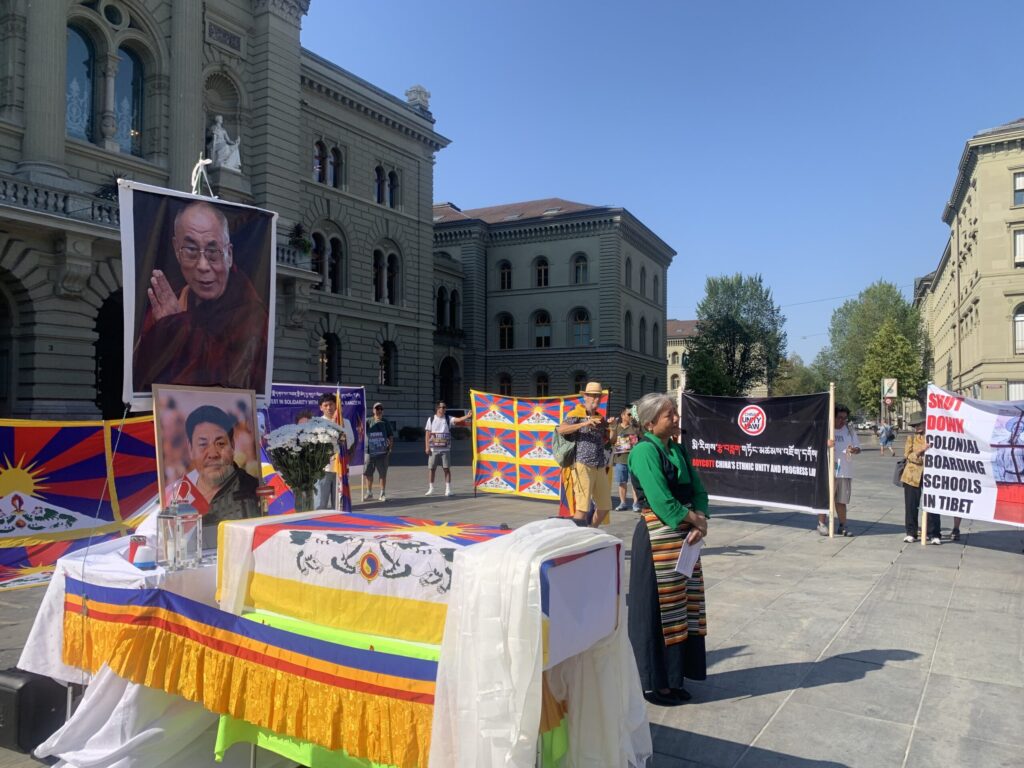
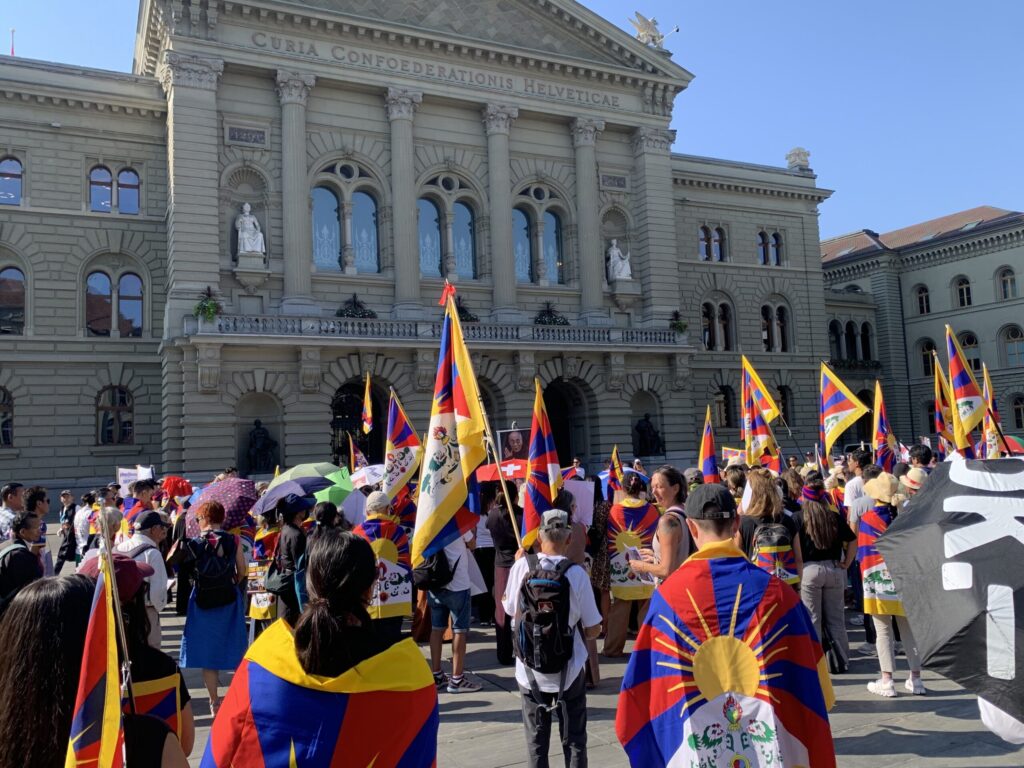
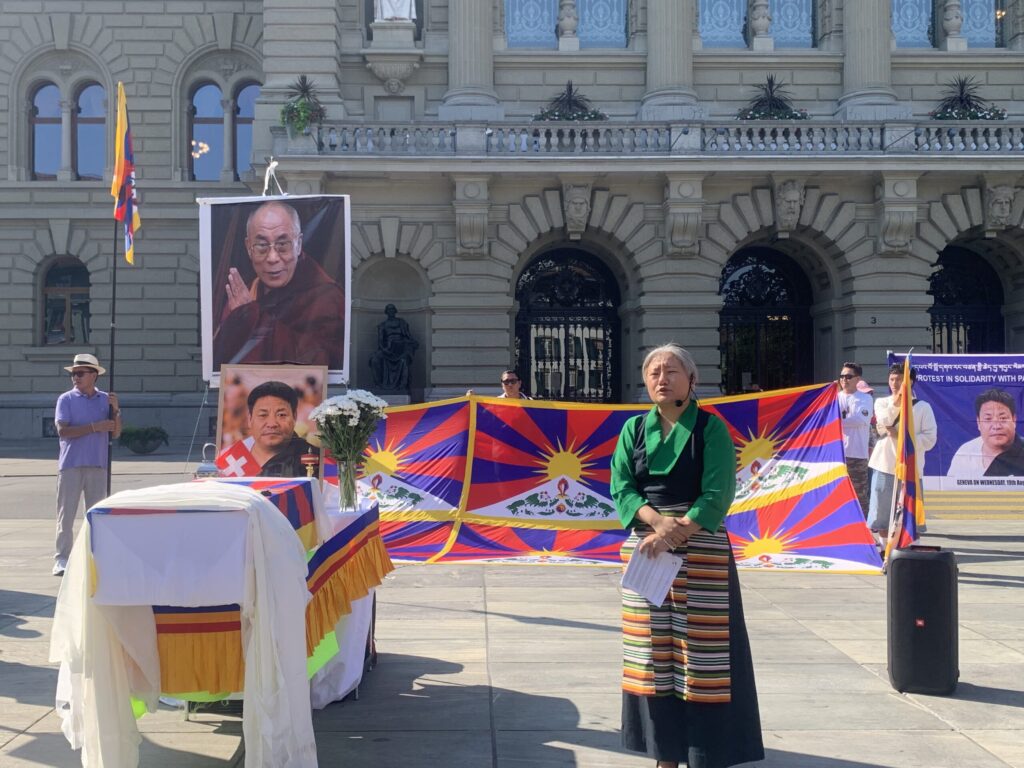
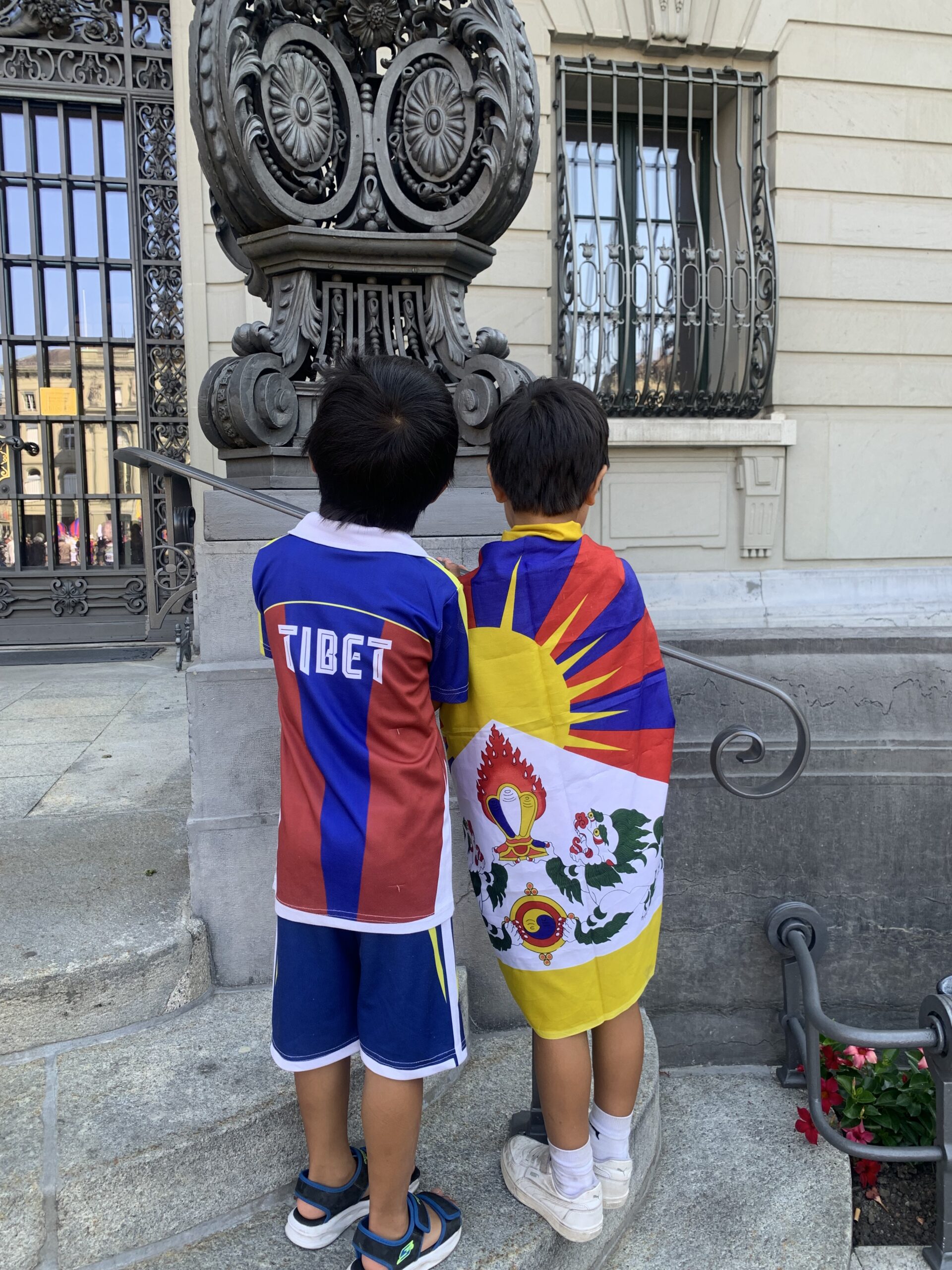
More than 200 Tibetans and supporters gathered near the Swiss Parliament in Bern on Friday, 14 August, for a peaceful demonstration protesting China’s intensifying assimilation policies in Tibet. The gathering also marked the 44th day since the self-immolation of Tibetan activist Lobga Rangzen, whose death has renewed international attention to the human rights situation inside Tibet.
The demonstration was jointly organised by the Tibetan Community in Switzerland and Liechtenstein, the Swiss Tibetan Friendship Association (GSTF), the Swiss Tibetan Women’s Association, the European Tibetan Youth Association, and Swiss V-TAG.
Among those attending were Tibetan community leaders, former Tibetan parliamentarians, former representatives of the Tibet Bureau, and representatives of the Tibet Bureau in Geneva, including Thinlay Chukki, Representative of His Holiness the Dalai Lama, and Phuntsok Topgyal, UN Advocacy Officer.
The gathering featured a series of solidarity activities, including the chanting of slogans, a scarf-presentation ceremony in front of a portrait of Pawo Lobga Rangzen, the singing of the Tibetan national anthem, a one-minute silence in memory of Tibetan martyrs, and prayers for peace.
Representatives of each organising organisation addressed the gathering, highlighting the ongoing human rights concerns in Tibet and honouring the sacrifice of Lobga Rangzen. They called on Switzerland, the United Nations, and the international community to take stronger and more concrete action in response to the deteriorating human rights situation in Tibet.
Representative Thinlay Chukki expressed her gratitude to the Tibetan community and supporters who had gathered in Bern to honour the memory of Lobga Rangzen and raise international awareness of the continuing human rights violations in Tibet.
“Today, as we commemorate the 44th day since the self-immolation of Lobga Rangzen, I would like to sincerely thank all my fellow Tibetans who have gathered here in Bern, not only to remember his sacrifice, but also to remind the international community of the atrocities that Tibetans in Tibet continue to face,” she said. Chukki also thanked representatives of the Swiss Tibetan Friendship Association, the Tibetan Women’s Association, the Tibetan Youth Association, and other non-governmental organisations for their participation in the demonstration.
Referring to Lobga Rangzen’s self-immolation, Chukki said his sacrifice should serve as a powerful call for the international community to pay greater attention to the human rights situation inside Tibet. “Since 2009, we have seen 157 known cases of self-immolation inside Tibet, and each of these self-immolators has called for freedom in Tibet and the return of His Holiness the Dalai Lama,” she said.
On behalf of His Holiness the Dalai Lama and the Central Tibetan Administration, she expressed profound gratitude to those who had sacrificed their lives and offered reassurance to their families that Tibetans in exile would continue working towards the restoration of freedom in Tibet. A major focus of Chukki’s address was China’s Ethnic Unity and Progress Law, adopted on 12 March 2026 and brought into force on 1 July 2026. She strongly criticised the legislation, arguing that it further institutionalises policies that threaten Tibet’s distinct cultural, linguistic, religious, and national identity. “It is unfathomable that the Chinese government has the audacity not only to egregiously violate Tibetans’ fundamental freedoms and human rights, but also to legalise such assimilation through legislation,” she stated.
Chukki warned that the policies went beyond cultural assimilation and described the situation in Tibet as cultural genocide. She highlighted provisions relating to the prioritisation of Mandarin Chinese, increased state control over Tibetan monasteries, and measures that, she said, could also affect people outside China who support the Tibetan cause. “This law not only impacts Tibetans inside Tibet, but also every supporter who has stood with us and supported our struggle for freedom in Tibet,” she said.
She called on the international community to take urgent and concrete action to ensure that the human rights of Tibetans are respected and protected in accordance with international law. Chukki also urged the United Nations to take concrete steps to investigate the human rights situation in Tibet. “The United Nations [must] take it upon itself to ensure that it sends a delegation to China, to Tibet, to document and record the human rights violations on the ground,” she said.
She further appealed to the Swiss Government to increase diplomatic pressure on China to comply with international law and the treaties to which it is a party. On behalf of the Tibetan community, Chukki expressed appreciation to Switzerland’s Federal Department of Foreign Affairs for acknowledging Tibetan appeals and responding with serious concern regarding the situation in Tibet.
She also thanked members of the Swiss Parliamentary Group for Tibet for their continued support and urged Swiss parliamentarians to consider appropriate resolutions to ensure that the human rights situation in Tibet remains firmly on Switzerland’s political agenda.