"Weshalb Tibet brennt" - Weissbuch der tibetischen
Zentralverwaltung
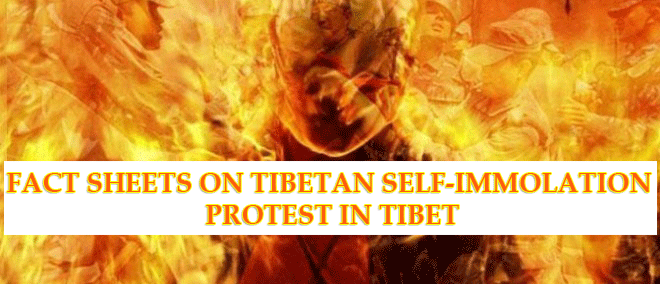
Bis zum heutigen Tag haben die Flammen des Feuers, das in Tibet
wütet, das Leben von 117 Tibetern gefordert. Diese sich
verschärfende Krise in Tibet wird befeuert durch Chinas völlige
Missachtung der religiösen Überzeugungen, kulturellen Werte und
vernünftigen politischen Bestrebungen des tibetischen Volkes.
Die Krise erwächst aus Chinas politischer Repression,
kultureller Assimilation, wirtschaftlicher Marginalisierung,
sozialer Diskriminierung und Umweltzerstörung in Tibet.
"Why Tibet is Burning" - White Paper of the Central Tibetan
Administration
As of this moment, the flames of fire raging in Tibet have
consumed the lives of 117 Tibetans. This deepening crisis in
Tibet is fuelled by China’s total disregard for the religious
beliefs, cultural values and reasonable political aspirations of
the Tibetan people. The crisis grows out of China’s political
repression, cultural assimilation, economic marginalisation,
social discrimination and environmental destruction in Tibet.
Erklärung des Sikyong Dr. Lobsang Sangay zum 54. Jahrestag
des Tibetischen Nationalaufstandes
The Statement of Sikyong Dr. Lobsang Sangay on the 54th
Anniversary of the Tibetan National Uprising Day
Im Jahr 1959 haben sich genau an diesem Tag Tausende Tibeter
aus allen Schichten der Gesellschaft und aus allen drei Regionen
Tibets (Ü-Tsang, Kham und Amdo) in Lhasa versammelt, um sich der
chinesischen Invasion und Besatzung Tibets zu widersetzen und
gegen sie zu demonstrieren. Wir sind die Kinder dieses
tragischen und doch historischen Moments in Tibets
einzigartiger, reicher und mehr als 2’000-jähriger Geschichte.
Heute sind wir hier versammelt, um an den mutigen Kampf dieser
selbstlosen, älteren Generation zu erinnern. Wir gedenken all
derer, die ihr Leben für Tibet geopfert haben. Die Sehnsucht
nach Freiheit, die sie dazu bewegte, am 10. März 1959 Widerstand
zu leisten, leitet uns auch heute noch in unserem Kampf um
Freiheit, Identität und Menschenwürde.
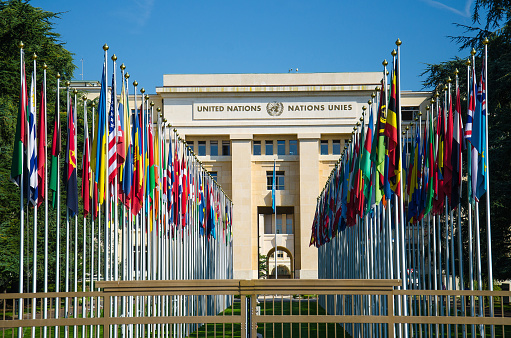
At UN session, China urged to allow Special Rapporteur to
visit Tibet
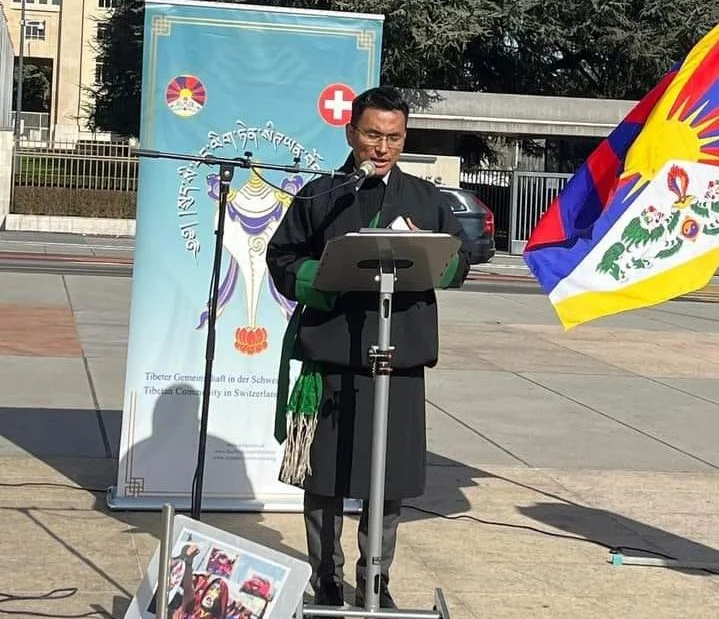
Mr. Tenzin Samphel Kayta (1st from left in middle row)
making oral statements in the current Human Rights Council
session in Geneva on 6 March 2013.
UN Special Procedure Mandate holders, who play a significant
role in the human rights mechanism, will present their reports
during the Human Rights Council’s 22nd session. Their reports
include specific country visits and communications of human
rights violation concerns to respective governments.
On 5 March, the UN Working Group on Arbitrary Detention has
presented its annual report to the plenary session. This was
followed by interactive dialogue.
Mr Tenzin Samphel KAYTA, speaking on behalf of the Society
for Threatened Peoples, said that since the 2008 uprising on the
Tibetan plateau, hundreds and thousands of Tibetans faced
arbitrary detentions leading to many cases of enforced
disappearances, custodial deaths, unfair trails and harsh prison
sentences.
He said that on 13 July 2012, five mandate holders wrote to
the Chinese authorities about the “allegations of arbitrary
deprivation of liberty and ill-treatment of a 17 year old girl
following the peaceful exercise of her rights to freedom of
opinion and expression and assembly.”
He further expressed deep concern over growing number of
relatives and friends of Tibetans who self-immolated. In late
June 2012, a week after Ngawang Norphel and Tenzin Khedup
self-immolated, Ngawang Norphel’s wife, Drolma Dekyi and two
other family members were detained for questioning.
On 5 March, the UN Working Group on Enforced or Involuntary
Disappearance (WGEID) and the Special Rapporteur on Freedom on
Religion or Belief presented their annual reports. Both had sent
official communications to China asking clarification on
allegations with regard to individual case and several thematic
issues.
Speaking on behalf of Society for Threatened Peoples on 6
March, Mr KAYTA said that the practice of enforced
disappearances continues to persist in many countries in Asia
and particularly in China as stated in the WGEID continues to
document.
He drew the plenary session’s attention to China’s failure to
issue official clarifications on status of residence or
well-being of 300 monks of the Kirti Monastery. Chinese
paramilitary police took the monks away in ten military trucks
to unknown destination in April 2011.
Speaking on religious freedom or belief, Mr KAYTA said though
the Chinese constitution guarantee’s freedom of religion;
China’s introduction of new management policies on monasteries
and intensification of so-called “patriotic education” campaign
has put pressure on religious institutions in Tibet Regions.
During such campaigns, the communist cadres force monks and
nuns to pledge allegiance to the Communist Party and denounce
their spiritual leader the Dalai Lama. The six million Tibetans
who follow Tibetan Buddhism regard His Holiness the Dalai Lama
as the manifestation of the Buddha of Compassion.
The Special Rapporteur on Freedom on Religion or Belief in
his report expressed major concern about State interference in
the direct proper functioning of religious institutions
referring to China’s “Democratic Management Committee” that
oversees the overall day-to-day affairs of monastic and
religious activities in Tibet.
In his final oral intervention, Mr Tenzin Samphel KAYTA urged
China –
To fully cooperate with UN mechanisms by fixing early
date of the visit of Special Rapporteur on Freedom of
Religion or belief including in Tibet regions where
situation is reported to be grim and serious.
To respond to the WGEID’s allegation transmitted on 6
August 2010 0 (A/HRC/16/48, paras. 118-21) with regard to
detention of hundreds of Uighur and disappearance of some of
them on in the event of unrest in Urumqi, Xinjiang in July
2009.
To take legislative action that will abolish
“reeducation through labor”
To clear path for the ratification of the International
Covenant on Civil and Political Rights which was signed on 5
Oct 1998.
Geneva (Switzerland) - 28 February 2013
UN Special Procedure quiz China on human rights in Tibet
Five UN Special Procedure mandate holders had made a joint
urgent appeal to China on 13 July 2012. They asked for
information on Jigme Dolma, a 17-year-old girl who was beaten by
the Chinese police for her peaceful protest in the main market
of Kandze (Ganzi) County, Sichuan on 24 June 2012. She was
hospitalised for two months and then sentenced to prison.
In the response China said, “our investigation reveals that
we have no knowledge about the case but there is a similar case”.
China while referring to Article 51 and 54 of the Constitution
said “… instigated Tibet’s independence and the splitting of the
country. She has violated the laws of China and has gone beyond
the scope of freedom of expression.”
However, Radio Free Asia report dated 7 September 2012 said
that Jigme Dolma had gone to protest “without informing her
family,” quoting a Tibetan woman living in the area. She threw
leaflets in the air and called out for freedom for Tibet, the
return of exiled spiritual leader the Dalai Lama, and the
release of Tibetan political prisoners, the source said.
“When she reached the main part of town, police overwhelmed
her and took her away, beating her at the same time,” said the
news report.
On 9 August 2012, eight UN investigative bodies had made a
joint urgent appeal communication to China. It sought
information on systematic undermining of the autonomous
functions and the right to freedom of religion, culture and
expression of the Tibetan Buddhist community. The communication
addresses on the following issues.
1. Replacement of existing “Democratic Management Committees”
to “Monastery Management Committee”
2. Patriotic re-education and legal education campaigns
including closure of monasteries
3. Self-immolations in Lhasa on 27 May 2012 led to rounded up
around 600 Tibetans and also several hundred Tibetans from the
eastern areas of Tibetan plateau were arbitrarily expelled from
Lhasa without accused of any political involvement in the past
or wrongdoing.
4. A notification by TAR Committee for Disciple Inspection
and Supervision Department banning party members, cadres,
government officials and students from participating in
religious activities such as Saka Dawa. The notification further
warned of severe punishment even with immediate dismissal from
their post if participated.
5. Arrest of over hundreds of Tibetan pilgrims including some
seventy five or eighty years old upon their return to the TAR in
January 2012. The Tibetan pilgrims returning to TAR via Nepal
were searched and arrested at the border for “illegally crossing
the border to attend the Dalai Lama’s teachings” despite they
had travelled from China with valid Chinese travel documents.
6. Cases of over 64 Tibetan intellectuals who have been
arrested and/or sentenced, or who have been fired from their
jobs or demoted since March 2008. It also raised detention and
whereabouts of singer Lolo, aged 29; a popular Tibetan comedian
Arther, aged 33 who was sentenced to 3 years imprisonment;
detention of handicapped singer Phulchung in June 1012; and
Tibetan writer and poet Ms. Tsering Woeser who wasn’t allow to
collect the prize at the Dutch Embassy in Beijing due to house
arrest.
7. Closure of a Tibetan school established twenty years ago
by the Chinese authorities on 2 April 2012 for teaching and
promoting Tibetan culture and language at Khadrok village in
Rongpo Tsa Lema Tounship in Kardze County. The school director
Nyendak and teacher Yama Tsering were arrested by the Kardze
County Public Security Bureau officers and whereabouts remain
unknown. It also raised case of another closure of a Tibetan
orphanage school in Kanlho (Gansu Province) which housed 50
students on ground of teaching Tibetan language, speech and
culture.
China has not provided any response to their allegations in
the house arrest of Tsering Woeser and closure of the orphanage
school cases.
The UN sent the above communications to China in 2012. These
communications were published by the UN on 20 February 2013 in
run up to the UN Human Rights Council’s 22nd Session which
started in Geneva on 25 February.
Five written statements on Tibet were submitted to the UN
Human Rights Council by five NGOs with ECOSOC Status. They
covered religious freedom, language, freedom of speech, assembly,
independence of judges and fair trial, arbitrary detention,
enforced disappearances, forced resettlement of nomads and
herders for their attention and consideration.
Since mid January, Representative Tseten Samdup Chhoekyapa
and Tenzin Samphel Kayta of Tibet Bureau in Geneva had met with
17 diplomats from EU, USA, Canada, Asian and Latin countries as
well as UN officials and international NGOs briefing on the
deteriorating human rights situation in Tibet.
Geneva (Switzerland) - 20 February 2013
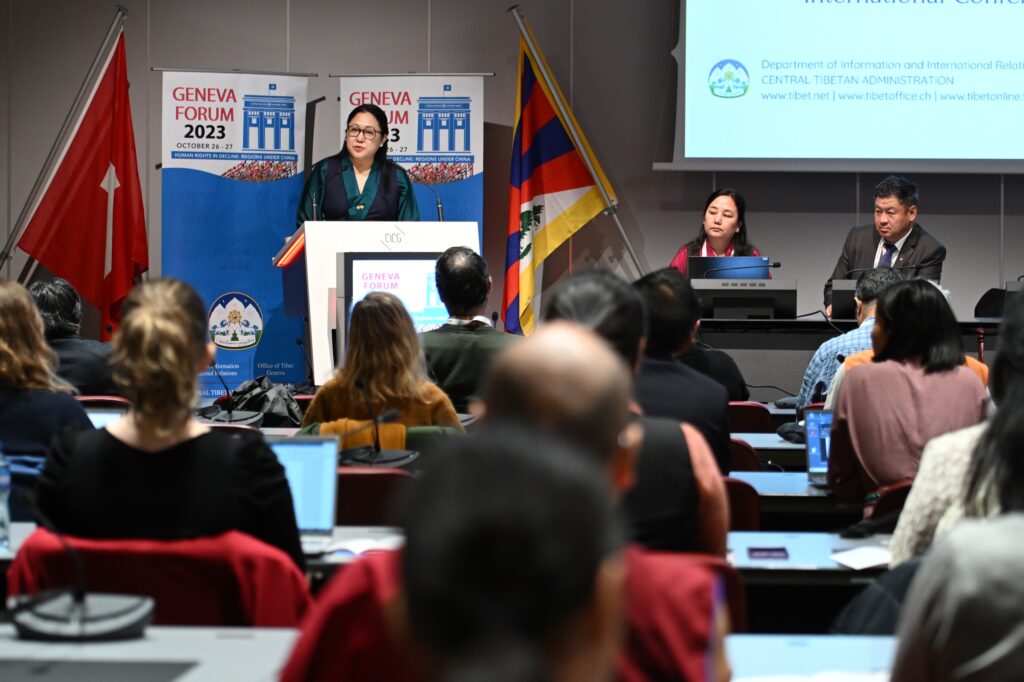
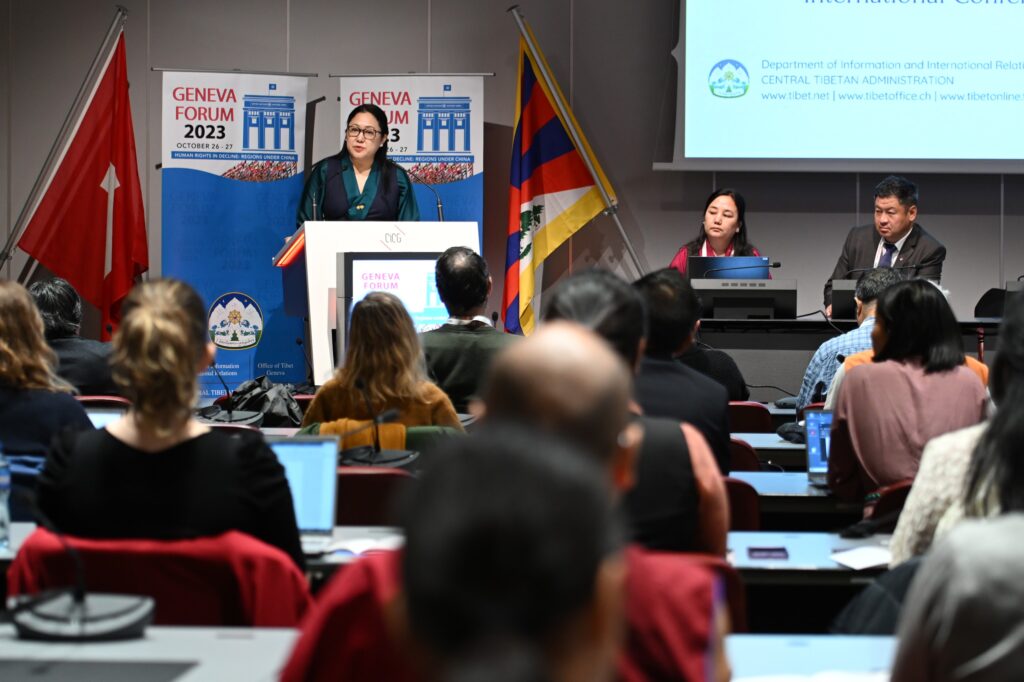
Kalon Dicki Chhoyang speaking at the Geneva Summit for Human
Rights and Democracy
Dicki Chhoyang, Cabinet Member of the Central Tibetan
Administration, Head of Department of Information and
International Relations. Geneva Summit for Human Rights and
Democacy, Feb. 19, 2003.